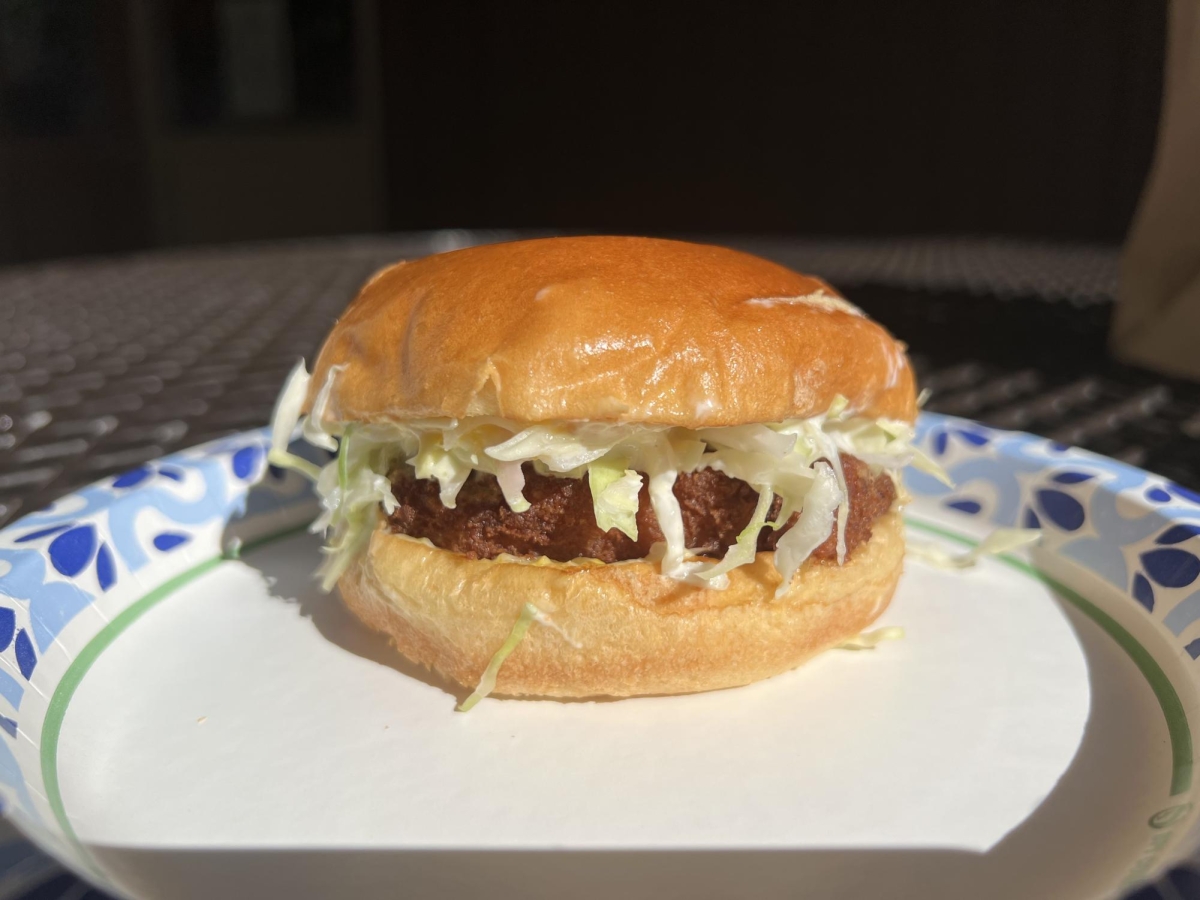


In the bustling environment of Yutori Cafe, the sharp smell of coffee swirls through the air, soft chatter between customers and baristas flows naturally and a subtle hum of traffic can be heard in the distance. A seemingly never-ending line of customers stretches from the entrance out to the parking lot, cutting through the calm sitting area.
Located on 3375 El Camino Real, Yutori Cafe, a Japanese cafe and market concept, arrived to the Palo Alto community on April 17. The cafe collectively has three different eateries — a cafe, marketplace and a deli, with a fourth eatery, a restaurant, planned to open in the next two months. The name “yutori” means “spaciousness” in Japanese, a philosophy that comes to life in the extensive patio.
Jerome Ito, the owner of Yutori, implements this philosophy into the cafe experience.
“Yutori means to create and have space,” Ito said. “In a sense, it’s giving yourself time to enjoy the little things, whether it be going out to eat, or coming here, you don’t want to be so rushed coming in and out. We want you to enjoy the surroundings just so you don’t have that sense of being in a hurry.”
When stepping through the entrance, visitors are met with a calm, unhurried energy that feels rare on a street as busy as El Camino Real. The outdoor seating area, while modest in size, is well composed with carefully arranged pieces of potted Japanese plants and shrubbery. The space also includes stone lanterns, small accent boulders and gray cobble, evoking a sense of a traditional Japanese zen garden.
Inside, there are currently three areas to explore — the cafe, marketplace and deli. The interior blends a Japanese minimalist theme with themes of Scandinavian functionality. Mainly, the design sticks to clean lines and neutral colors while also having natural materials, such as wood, to make the space feel uncluttered.
The cafe section follows this theme closely, with warm lighting from lamps combining with natural light coming through vast windows, creating a serene and relaxing atmosphere.
Going deeper, the marketplace hosts a variety of packaged items, ceramics and home goods available for sale.
Just adjacent to the marketplace lies the konbini, which means “convenience store” in Japanese. It contains an assortment of items found in Japan such as onigiri, which are Japanese rice balls, fruit sandwiches and bentos for a quick and simple meal.
The deli at the back of the store offers a wide variety of sandwiches ranging from ebi katsu sandwiches, ebi meaning shrimp in Japanese, to a Japanese twist on a classic BLT sandwich with teriyaki chicken.
Ito identifies his visits to Japan as a key inspiration for the cafe, marketplace and deli.
“It was a lot of travel back and forth between Japan,” Ito said. “So we’d look at new things that are trending. What we [him and his family] love to eat, whether it be sandos [Japanese style sandwiches] from the convenience store or just a dish from a local spot.”
Ito felt the importance of making a diverse place to appeal to a wide range of people.
“We wanted to do something a little more upscale to the restaurant side, but still have the marketplace where people could come and grab stuff like you as students,” Ito said. “It’s not just [for] the fans of the nicer restaurant where you have to sit down and dine in, you can also get a lot of options to take away. That was the kind of thought between splitting it and not just doing one big restaurant, making it multi-dimensional.”
To differentiate itself from competitors, Ito adds his own creativity to traditional Japanese menu items.
“The menu to me is being creative and doing stuff — not [purely] Japanese food,” Ito said. “I use the same techniques, but I add my own flair to it, so it’s never like traditional-traditional.”
Ito also credited the importance of building an inviting atmosphere to pair with appetizing menu items in order to stand out.
“We’ve spent a lot of time and effort creating a really beautiful environment, one that you probably won’t see in any restaurant,” Ito said. “That was kind of the focus, to create as much of a beautiful exterior and interior to reflect what’s also on the menu. So we want it all to mesh seamlessly.”
We visited Yutori to see if the cafe lived up to its expectations on a Saturday afternoon. At 12:30 p.m., the cafe was very busy with a long line stretching from the entrance of the shop, all the way to the parking lot.
It was around a 30 minute wait to be able to place an order for the cafe. The menu consists of classic coffee drinks in a typical cafe, signature drinks unique to Yutori and drinks containing tea. Our drinks arrived to us in 15 minutes, but the pastries were given right after ordering.
While waiting for our drinks, we explored the konbini and deli section further in the back of the shop. Although the wait for the cafe was long, there were not nearly as many customers in the back. The deli had no line for customers ordering food, and the supermarket section stocked rice bowls and other items.
Overall, Yutori Cafe created an enjoyable experience not only with balanced pastries, flavorful food and pleasant drinks, but also with its welcoming atmosphere and attentive service. With reasonably priced food options from all three eateries, it’s definitely a spot worth a visit to relax, meet up with friends or study.
Earl Grey Matcha Latte ($8)
The Earl Grey Matcha Latte was a personal favorite of ours. The drink contains floral Earl Grey cold foam on top of a matcha latte, with the option of iced or hot. The two pair quite well, with each part not overpowering the other. The matcha itself is not too sweet, and the cold foam has a strong creamy Earl Grey flavor, creating a smooth, balanced drink.

Kyoto Latte ($6)
The Kyoto Latte is one of Yutori’s signature drinks. It contains a blend of espresso and elderflower, topped with freshly grated lemon zest. The bright and zesty notes of this drink contrast with the calm of the smooth, creamy coffee flavor. This additional touch of sourness makes for a unique experience. This latte is best to drink slowly to fully admire its well-balanced makeup.

Matcha Financier ($4.50)
The Matcha Financier is one of many pastries offered in the cafe. The outside of the pastry has a satisfying crunch to it, giving way to a soft, buttery and cake-like interior, with a subtle matcha flavor present. It’s not overly sweet, so the matcha flavor doesn’t get overpowered, which allows for every bite to be rich and pleasant.

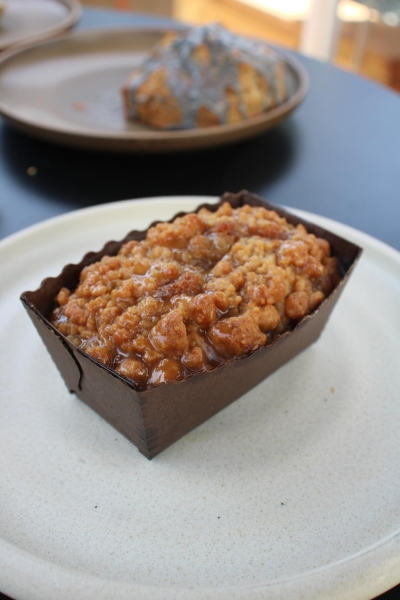
Banana Loaf with Kinako Streusel ($6)
The Banana Loaf with Kinako Streusel is a Japanese twist on banana bread. The banana flavor is strong, coming through on each bite with the kinako streusel on top adding a toasted, nutty finish. The contrast between the soft and crunchy textures makes every bite enjoyable.
Unagi Don with Cucumber Salad ($19)
The Unagi Don is one of many rice bowls available in the deli section. It is a rice bowl with sides of pickled ginger and cucumber salad topped with unagi, which in English is eel. The eel is rich and fatty, soaking up the sweet kabayaki glaze drizzled over. The pickled ginger strikes a perfect balance counteracting the caramelized grilled eel. The portion is generous, creating an all-around delightful and healthy meal.

Ebi Katsu Sandwich ($18.50)
The Ebi Katsu Sandwich is a breaded shrimp cutlet sandwich served on a brioche bun that’s crispy on the outside and maintains a remarkably tender inside. There is a nice creamy yuzu kosho tartar that pairs well with the cabbage and pickled red onion creating a freshness to every bite. The combination between savory and juicy shrimp with acidic tartar sauce creates a superb sandwich.