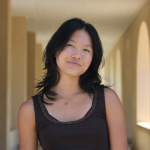

Rumeysa Ozturk, an international student at Tufts University, was walking near her apartment in broad daylight last spring when multiple figures wearing hoods and face coverings approached and grabbed her. Identified as Immigration and Customs Enforcement agents, they arrested her and took her away.
Ozturk was stripped of her visa following her detainment on March 25, for engaging in what the U.S. government cited as antisemitic campus activism, according to NPR. The only evidence provided was an op-ed piece Ozturk wrote for the Tufts Daily a year prior, criticizing her school administration’s response to the Israel-Hamas war.
The Trump Administration’s actions against international students like Ozturk, who express their views, has created a new wave of fear across the nation — not just for immigrants but for journalists, their sources and, some say, anyone with an opinion the administration doesn’t like.
As a result, on a scale some say hasn’t been seen in this country for generations, student journalists are choosing to self-censor.
This same fear — what journalism experts refer to as a “chilling effect” — is present in student journalists and international students at Stanford University, just across the street from Palo Alto High School.
“Several international members of our own staff even left their positions at The Daily,” stated in an Aug. 7 Letter from the Editors published in the Stanford Daily that described the self-silencing of international students and their increased hesitation to speak out. “Many of those who stayed requested to stop writing news articles related to protests or political events on campus and asked that their previous articles be taken off our website.”
This “chilling effect” the Stanford Daily and student publications across the country are facing occurs when an individual refrains from writing and publishing stories on certain topics out of the fear of facing repercussions, which can include facing public criticism, advisers being dismissed, programs getting entirely shut down, and, for some – and their family members – detention and deportation.
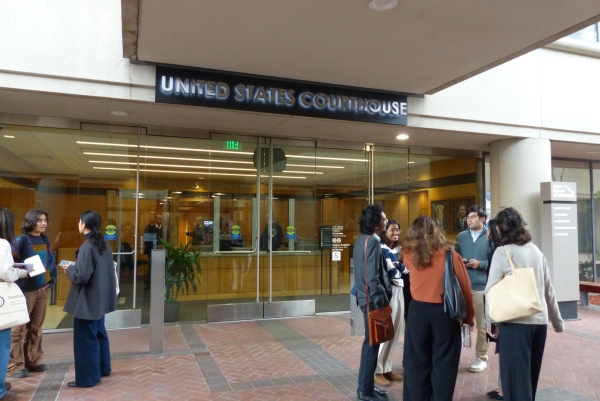
Having noticed the harmful effects of self-censorship on its work, the Stanford Daily decided to go to court. On Nov. 19, attorneys representing the Daily appeared in a federal courtroom in San Jose, Calif., to argue that recent immigration enforcement actions by the U.S. government have created and amplified this same “chilling effect” colleges have observed in student journalism.
The case, Stanford Daily vs. Marco Rubio, the secretary of state, argues that without intervention, the government’s use of immigration law provisions threatens to inflict long-lasting damage to student media as contributors and sources alike continue to go silent. In support, the Student Press Law Center organized a coalition of 55 student news organizations and leaders to provide information and arguments — in the form of an amicus brief — to prove the violation of free speech.
In an interview with the Freedom of the Press Foundation on Oct. 1, Greta Reich, editor-in-chief at the Daily, discussed the long-term implications of self-censorship among student journalists.
“With every resignation, declined assignment and refusal to speak on the record, we actively miss out on covering an entire group of students’ voices, as well as the many events and stories on campus that benefit from an international student’s perspective,” Reich said. “We are simply not able to conduct our business when speech is chilled like this. When an entire subsection of the student population doesn’t feel comfortable speaking with or writing for the Daily, we can’t know what stories are being lost.”
The Daily’s case is primarily focused on the “chilling effect” faced by college publications, but we wonder: Does this alleged “chilling effect” exist in high school journalism, too? To find the answer, members from Palo Alto High School’s Verde Magazine, Campanile and InFocus News interviewed students, advisers and experts from across the country at the Fall 2025 National High School Journalism Convention in Nashville from Nov. 13 to Nov. 16.
The simple answer is yes. Throughout the convention, we found that an overwhelming majority of attendees agreed with the Stanford Daily that they feel a “chilling effect” exists and has a profound and harmful impact on scholastic journalism today.
As of late, high-schoolers have been reaching out to the Student Press Law Center, which works to protect student press freedoms, expressing concerns about covering topics prone to receiving backlash.
“They’re sort of quailing away from some of those stories because they’re worried about undermining the ability for their friends to remain in the country,” SPLC staff attorney Jonathan Gaston-Falk said. “We have seen evidence of the fact that student journalists and their sources are less willing to bring some of those concerns and complaints to light.”
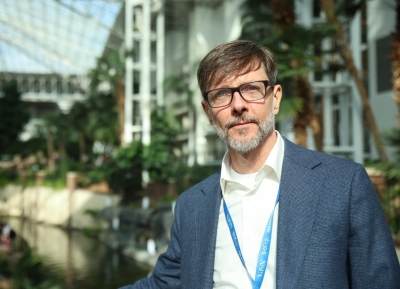
According to Gary Green, executive director of the SPLC — which has seen a 42% increase over the past year in students seeking legal support and guidance to navigate censorship in their schools — the “chilling effect” is more prevalent in states without “New Voices” laws that protect the First Amendment rights of student journalists, as students are more fearful of suffering negative consequences.
“If you have students in a state that do not have New Voices laws, they just give up, or they just self-censor because they know that they don’t have a lot of teeth to fight back with,” Green said.
But this fear has even caused journalists in states with strong student press laws, like California, to shy away from writing about more controversial topics such as immigration and political news.
In Cupertino, Calif., at Homestead High School’s newspaper, the Epitaph, reporter Luna Pitl said she was worried about the repercussions of coming off too political when writing about “Alligator Alcatraz,” the migrant detention center located in the Florida Everglades, pushing her to take a less charged stance.
“We were writing about how [Trump’s] policies are unfair, and how the facility unfairly holds a lot of people, and how, in general, it was a really unfair setting,” Pitl said. “We thought that it would show our distaste towards one political side too much and feel like an attack against Donald Trump himself, so we changed the story. We chose to focus it more around the facility itself and mention the government less.”
The “chilling effect” and the fear of pushback from public opinion has also had influence on journalism covering the Israel-Palestine conflict, according to Mike Hiestand, senior legal counsel at the SPLC.
“I had one student in California who had done just an amazing attempt to provide the history of the [Israel-Palestine] conflict and also provide some of her views,” Hiestand said. “It was really good journalism. But as a result of her putting that out there, the pushback was so bad, she had people writing to a college she had been accepted into and demanding that the college revoke her admission.”
Even at Paly, stories of self-censorship in the past year are easy to find.
Former Paly journalism student Zachary Crystal refrained from publishing an opinion piece about the Israel-Palestine conflict in early 2024 because he feared his personal beliefs would not appeal to the Palo Alto community and result in backlash.
“It was a challenging situation to try to remain true to my own beliefs while also being fair and objective, and having my editors, my adviser and the rest of my classmates … see me as the same good person,” Crystal said.
Crystal said if he had been in a different situation, either with more journalism experience or living outside of Palo Alto, he may have gone forward with publishing.
“Leaving Palo Alto makes you realize you’re kind of in a bubble and not able to necessarily say exactly what you think if it’s outside the norm,” Crystal said. “But it doesn’t stop in high school. Just because you don’t have an opportunity [to write about something] now, doesn’t mean you can’t get your voice out and make an impact [in the future].”
Julia Curtis, a journalist for The Paly Voice, earlier this fall pulled back a story about Jimmy Kimmel’s suspension from his ABC show, “Jimmy Kimmel Live!,” after comments he made about the death of right-wing activist Charlie Kirk.
“I was writing an article comparing Kimmel’s experience to the student journalist experience with censorship,” Curtis said. “I thought more about it, and because it was a very opinionated piece covering heated and intense opinions, I decided not to publish it.”
Curtis feared that people who disagreed with her opinion would react negatively to the story, potentially limiting future career opportunities.
“It was mostly pressure of not wanting it to affect me later,” Curtis said. “In Palo Alto, we live in a bubble of many people having the same opinions and similar beliefs and views. But if I wanted to work or go to school in places where people have different beliefs, even though I’m proud of my beliefs, I wouldn’t want to be identified as someone with really strong opinions on those topics in case it would prevent me from achieving things I want to achieve.”
Alyssa, a Paly journalism student who has chosen to use a pseudonym to protect her identity, chose to self-censor a story about protests because her family does not have a green card, and she worries publishing her name could prevent them from obtaining one.
“It puts a barrier between what I want to write and what I can write,” Alyssa said. “A lot of the time, the stories are political and about the president, and [the government] can use anything and everything to prevent me from getting a green card, so I need to be really careful.”
Alyssa expressed regret in not being able to write about topics that appealed to her.
“I really wanted to cover the No Kings and abortion protests, to hear about how much people care and want to fight for what they believe is right,” Alyssa said. “Unfortunately, it’s so controversial and it’s not good for me to come off as appealing to a certain side.”
Of course, student journalists continue to deal with traditional censorship as well.
In St. Louis, Missouri, Kirkwood High School was sued by parents after its newspaper, the Kirkwood Call, produced stories about hookup culture and student drug usage.
Shiloh Byers, a senior and business managing editor at the Kirkwood Call, said the court case prompted her to step down from her position as a breaking news writer to become business managing editor because she wasn’t able to cover the topics she wanted to write about.
“I would rather watch all of this from afar than have to be about to be sued again,” Byers said. “[If I could write freely], I would cover things like affirmative action whenever it got banned, and I would love to cover things like fights around in other schools surrounding us, and the issues of drug use in St. Louis.”
In Alexandria, Va., Alexandria City High School’s newspaper, Theogony, faced backlash from their school district in spring of 2024 after publishing a series of investigative stories covering the creation of a second campus. The district threatened to pass policies limiting student journalists’ First Amendment rights, in which they would need to pass their stories through district personnel.
In response, Theogony began to collaborate with the SPLC and campaign against the censorship pressures they were facing from their district. Rozalia Finkelstein, editor-in-chief at Theogony, says that during the campaign, there were times they felt it would be better to self-censor to prevent further damage.
“There were times where we felt it might be best to not ‘rock the boat’ with our articles in fear of making things worse for ourselves,” Finkelstein said. “Yet, there will be times when the importance outweighs the consequences. When that happens, you cross every ‘t,’ dot every ‘i,’ and publish anyway.”
Cathy Kuhlmeier — who was the original respondent in the 1988 Supreme Court case Hazelwood School District v. Kuhlmeier that granted schools in most states the ability to censor school-sponsored speech — says journalists need to work hard not to give into fear.
“It’s easier to shy away than rock the boat,” Kuhlmeier said. “If we keep self-censoring, then aren’t we just basically giving our rights away? It’s not going to stop any time soon. That’s why I encourage you guys to fight for what you believe in.”
As the Trump administration’s policies continue to put pressure on journalists nationwide, back at the convention, the SPLC’s Green said scholastic journalism needs students who are willing to express their opinions and report on difficult issues.
“We need heroes right now,” Green said. “There are challenges that people going into journalism today have to deal with that I didn’t have to. But we need courageous young people. We need to hear your voices.”