

 After enjoying a ham and cheese croissant at one of Town & Country’s tiny outdoor tables, Palo Alto High School senior Camila Luz opens the trending food rating app, Beli. She carefully considers Douce France’s ambiance, service and flavors before posting a review on the app. Douce France is now her second-highest-ranked restaurant on Beli.
Beli, the food-focused social media app which launched in 2021, has skyrocketed in popularity among Generation Z and Millennials. Beli’s Instagram account reported that users posted a total of 30 million reviews in 2024, surpassing its 20-year-old competitor Yelp, which produced just 21 million reviews that same year. Beli serves as a platform for users to rate eateries anywhere in the world and post their dining experiences for friends to see on their feeds.
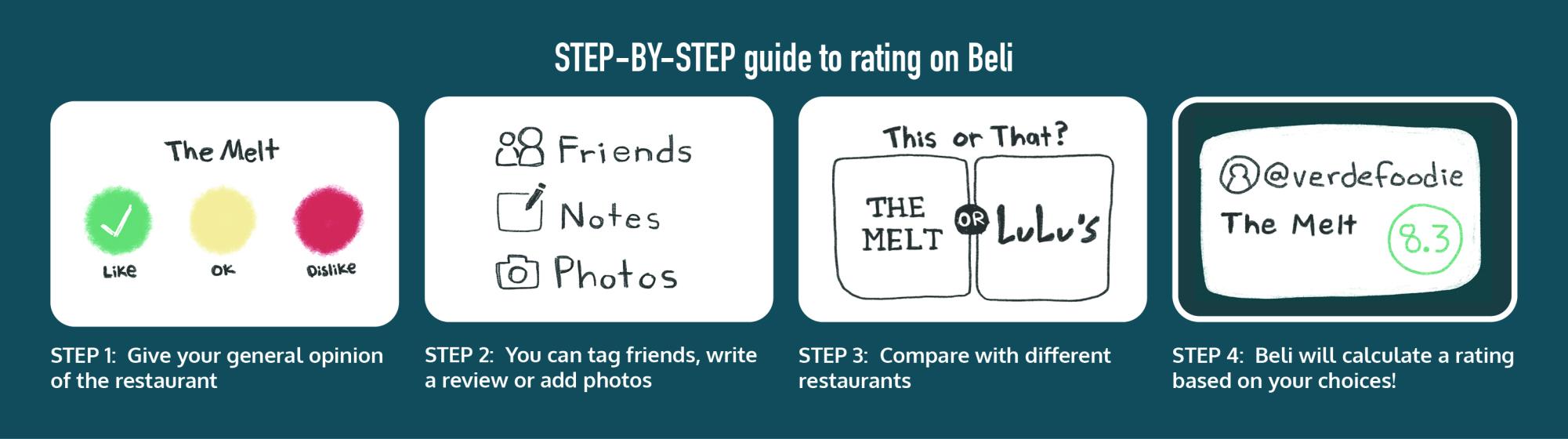
One of the app’s key features is the ability to post photos, allowing users like Luz to share their finds with food lovers and inspire others to try new spots.
“I love taking pictures of my food,” Luz said. “Now I can upload my photos onto an app where people care about food.”
Unlike traditional reviews, on Beli, users simply indicate ‘I liked it!’, ‘It was fine’ or ‘I didn’t like it.’ Then, after a series of this-or-that comparisons to restaurants users have already ranked, Beli creates a numerical score out of 10. Paly senior Alice Sheffer says the system makes the rating process much easier.
“I don’t know what I’d give [a restaurant] on a scale of 10,” Sheffer said. “But [when] you rank them in comparison to each other, I know that.”
From hip cafes to local mom-and-pop shops, Beli acts as a go-to guide and helps users scout out popular places in town.
Beli initially took off in tight-knit communities like college towns, which was the case for second-year Foothill College student and Verde alumnus Austin Fujii, who was introduced to the app by a friend in 2025.
As Palo Alto’s third-most prolific reviewer, Fujii said connecting with friends on the app is interesting because it provides him with food suggestions from anywhere.
“Beli succeeds more in appealing to students who have social networks beyond just their home or college town,” Fujii said. “College students are from all over the country and world, not to mention how often college students travel on road trips, cheap weekend flights or even study abroad programs.”
According to Beli’s founders, over 80% of their user base is under 35 years old. Fujii says he believes young people are attracted to Beli over other food-reviewing sites.
“For Gen Z specifically, Beli seems like the new version of Yelp influenced by familiar elements of social media,” Fujii said. “Instead of sifting through Google Maps or Yelp reviews, people can go straight to Beli first because they can see their friends’ advice instead of gambling on the reviews of people they’ve never met.”
Because of their young user base, Beli may not appeal to all ages equally. Paly physics teacher and self-described foodie Michael Lupoli said older users might not fully grasp Beli’s culture.
“A lot of this app screams younger generation to me just because of the way the app is set up,” Lupoli said. “The language used in the app is language that younger people might use, and social media in general targets younger generations.”
Based on individual rankings, Beli builds a personalized taste profile for every user. Users can also create their own ranked lists while competing on the gamified interface to visit the most spots in a single city.
Despite this, Paly senior Amalia Tormala chooses not to climb leaderboards and instead emphasizes the collaborative feel of the Beli community.
“There’s not, at least in my experience, a competitive Beli culture,” Tormala said. “It’s just people who enjoy food sharing their recommendations with other people. That’s what I like about it.”
Beli’s laid-back nature distinguishes itself from traditional social media apps and makes it a platform students reach for with little hesitation.
“On Beli, there’s less social interaction, and it’s more about seeing what your friends are up to,” Tormala said. “It’s more about just admiring what everyone is doing, and there’s no judgment passed.”
Tormala says she believes that Beli has changed the future of dining out.
“People will always eat,” Tormala said. “Beli will not die out anytime soon, but I do believe that competitors will start to come, and that will diminish Beli’s popularity. Right now, it’s the only app of its kind.”
At first glance, Beli may just appear as another colorful platform to leave restaurant reviews on. But for some, it’s a digital diary of meals out, complete with sweet snapshots and timestamps, making Beli a heartfelt way to capture sentimental moments.
“Beli is another form of remembering aspects of your life and memorializing events and time spent with close friends,” Sheffer said. “We all like to keep track of things that we do.”